Signs Your Commercial Refrigeration System Is About to Fail
A commercial refrigeration system rarely fails without warning. In many cases, there are smaller signs first, and spotting them early can help you avoid stock loss, rising energy bills, disruption to your staff, and a much bigger repair bill later on.
For many businesses, refrigeration is simply part of the working day. It runs in the background, keeps products at the right temperature, and only gets real attention when something goes wrong. That may be understandable, but it is also where problems start. A struggling system often gives you clues before it breaks down completely, and those clues are worth taking seriously.
Whether you rely on a cold room, display fridge, walk in chiller, prep area refrigeration, or a larger industrial setup, early intervention can protect both product quality and day to day operations. If you already know your system needs attention, ColdCare’s industrial and commercial refrigeration services cover installation, maintenance and repair support for a wide range of businesses.
Why early warning signs matter
A refrigeration failure is not always dramatic at the start. Sometimes it begins with a unit taking longer to cool down. Sometimes it is a new noise that staff notice but ignore. In other cases, you may only realise something is wrong when temperatures start drifting or products are not holding their quality as expected.
The problem is that minor faults rarely stay minor for long. Compressors work harder, components wear down, efficiency drops, and energy use climbs. For food related environments, there can also be hygiene and compliance concerns, which is one reason businesses should not leave refrigeration issues unresolved. If that side of things is relevant to your operation, it is worth reading The Role of Refrigeration in Food Safety Compliance as a related piece.
1. Temperatures are becoming unstable
One of the clearest warning signs is inconsistent temperature control. You may notice that a fridge, cold room or chilled processing area is no longer holding the same temperature throughout the day, or that it struggles during busy periods when doors are opened more often. Even small fluctuations can be a sign that something is not working as it should.
This kind of issue may point to worn parts, poor airflow, refrigerant problems, sensor faults, or a system that is under increasing strain. Left too long, it can affect stock quality, shelf life and business confidence.
2. The system seems to run constantly
Commercial refrigeration should cycle sensibly, not appear to be working flat out all day with little let up. If the unit seems to be running for longer than usual, or never quite reaches the point where it can ease off, that is often a sign of declining efficiency.
A business may live with this for a while because the system still appears to be operating. Still, constant running is usually a warning that something behind the scenes needs attention. It also tends to feed directly into higher energy costs.
3. Your energy bills are creeping up
If your electricity costs are rising but nothing obvious has changed in how the site operates, refrigeration is one of the first places worth looking. Systems that are struggling often need more energy to achieve the same result. That may be due to dirty coils, worn components, airflow restrictions, failing controls, or a fault that has not yet caused a total breakdown.
ColdCare already covers the wider cost side of this in Energy Efficient Refrigeration: How to Cut Your Business Costs, but rising bills can also be a warning sign rather than just an efficiency issue.
| Warning sign | What it may suggest | Why it matters |
|---|---|---|
| Unstable temperatures | Cooling performance is slipping | Can affect stock quality and safety |
| Long running times | System is working harder than normal | Higher wear and higher running costs |
| Ice or condensation | Airflow, seal or component issues | Reduced efficiency and possible failure |
| Repeat callouts | Underlying fault not fully resolved | Growing repair costs and downtime risk |
4. New noises are starting to appear
Commercial refrigeration systems are never silent, but most sites become familiar with how their equipment normally sounds. That is why new or unusual noises tend to stand out. Buzzing, rattling, grinding, clicking, or an inconsistent hum can all point to components that are starting to wear or fail.
It may be tempting to leave it until the next service, especially if the unit is still cooling, but strange noises are often one of those warnings that businesses later wish they had acted on sooner.
5. Ice build up or excess condensation is appearing
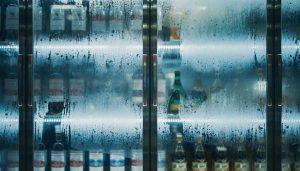 Ice where it should not be, or persistent condensation around a system, is another common clue that something is off. It could be linked to airflow issues, door seals, drainage problems, controls, or performance decline in key parts of the system. Even if the cause seems minor, it is usually a sign the system is not operating cleanly or efficiently.
Aside from the efficiency side, these problems can also create housekeeping issues, slip risks, and frustration for staff who have to work around them.
6. Product quality is being affected
Sometimes the first real sign of refrigeration trouble is not the equipment itself, but the products being stored or processed. Stock may not be holding its condition as expected, chill times may seem slower, or staff may start raising concerns about temperature consistency in different areas.
For food production and similar environments, this is especially important. Chilled systems are there to support safe, stable operations, and when that performance starts slipping, the wider impact can be significant. That also ties in closely with ColdCare’s work on chilled processing systems for controlled, reliable production environments.
7. Breakdowns are becoming more frequent
One repair callout every now and then does not automatically mean the whole system is failing. But if faults are becoming more regular, or if similar issues keep returning, it usually suggests there is a deeper problem that has not properly gone away. Repeated disruption often ends up costing more than businesses expect, particularly once you factor in downtime and operational stress.
This is often the point where it becomes sensible to step back and assess the condition of the wider system, rather than continuing with short term fixes alone.
8. Controls, sensors or alarms are behaving oddly
If readings seem inconsistent, controls are unresponsive, or alarms are appearing without a clear cause, it is worth investigating. Control and monitoring issues can be easy to dismiss at first, but they can leave staff working with unreliable information, which makes it harder to manage temperatures confidently.
In practical terms, that can mean delays, uncertainty, and a greater chance of stock or process issues going unnoticed until the problem gets worse.
Repair or replace?
There is no single answer here. In some cases, a targeted repair and proper maintenance plan will get a refrigeration system back to reliable working order. In others, frequent faults, poor efficiency, and growing callout costs may point towards replacement being the smarter long term decision.
What matters most is getting an honest view of the system’s condition, its age, and whether the current setup still suits the demands of your site. ColdCare works across a range of industries, which you can see on the sectors page, so the right answer often depends on how critical refrigeration is to your daily operation.
Don’t wait for a complete failure
When a refrigeration system fails outright, the consequences can move quickly. Stock can be lost, processes interrupted, and emergency repairs become far more stressful than planned attention would have been. That is why it usually makes sense to act when the early signs start showing, rather than hoping the issue settles down on its own.
If your commercial refrigeration system is showing signs of strain, get in touch with ColdCare to arrange support. A timely inspection, service visit or repair may help you avoid a more disruptive and expensive problem later on.