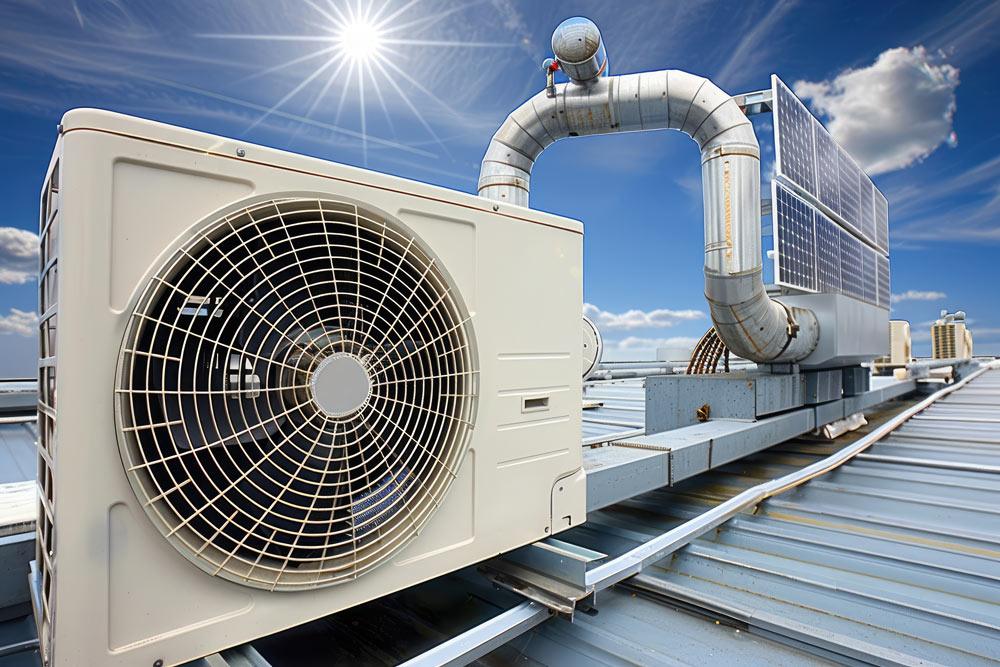
Modern buildings need heating and cooling systems that are flexible, energy efficient and easy to control. That is why many businesses now choose VRF or VRV air conditioning instead of traditional HVAC systems.
If you have been researching commercial cooling solutions, you have probably come across the terms VRF and VRV. Many people assume they are different technologies. In reality, the difference is much simpler than most guides explain.
In this article, we explain VRF vs VRV air conditioning. We cover how the systems work, the benefits they offer, where they are commonly used and how to decide which option is right for your building.
Whether you manage offices, retail units, hospitality venues or industrial sites, this guide will help you understand how these advanced climate systems work and why they are becoming the preferred choice for modern buildings.
What Is a VRF Air Conditioning System?
A VRF air conditioning system stands for Variable Refrigerant Flow system.
It is a type of HVAC technology designed to heat and cool different areas of a building independently. Instead of using one large system that treats every room the same way, a VRF system adjusts refrigerant flow based on the needs of each zone.
This allows different rooms to maintain different temperatures at the same time.
For example:
- One office can stay cool
- A meeting room can stay warmer
- An unused area can automatically reduce energy use
A VRF system usually includes:
- One or more outdoor condenser units
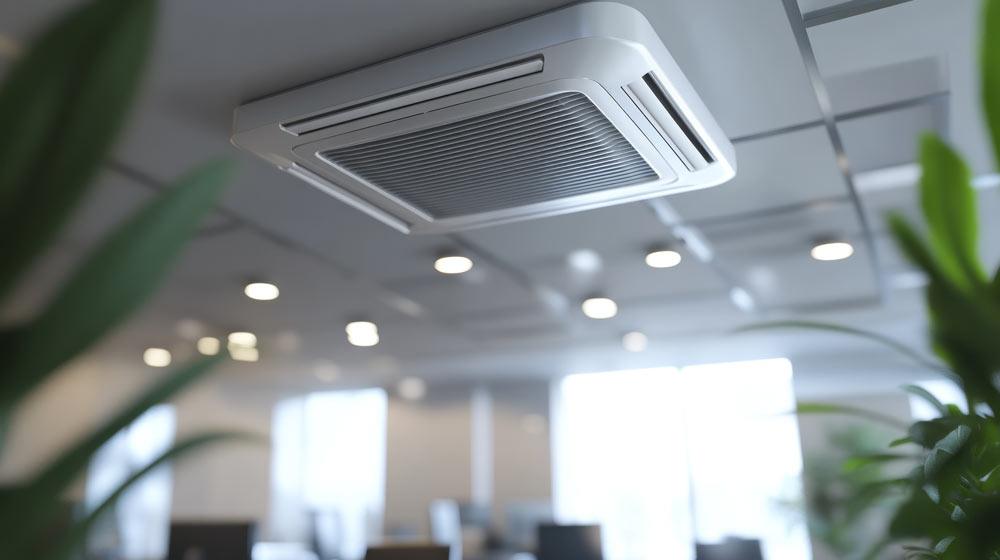
- Multiple indoor air conditioning units
- Refrigerant pipework connecting the system
- Smart controls and sensors
Because the system constantly adjusts output, it uses far less energy than many traditional HVAC setups.
Businesses looking for modern and flexible cooling solutions often choose an air conditioning service to improve comfort while lowering operating costs.
What Is a VRV Air Conditioning System?
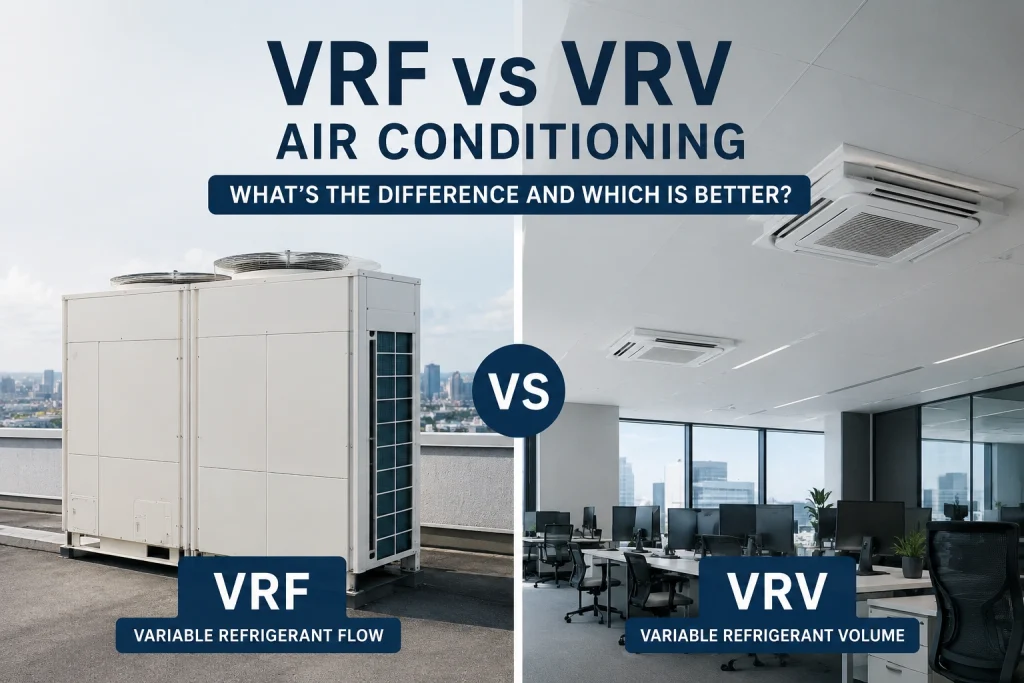
A VRV air conditioning system means a Variable Refrigerant Volume system.
This is essentially the same technology as VRF.
The confusion exists because “VRV” is a trademarked term created by Daikin. Other manufacturers cannot legally use the name VRV, so they use the term VRF instead.
In simple terms:
VRV = Daikin branded terminology
VRF = Industry-wide terminology
The actual operating principles are almost identical.
So when people ask:
“Is VRF the same as VRV?”
The answer is yes in most practical situations.
VRF vs VRV Air Conditioning Explained Simply
The easiest way to understand the difference between VRF and VRV is this:
| Feature | VRF | VRV |
| Meaning | Variable Refrigerant Flow | Variable Refrigerant Volume |
| Technology | Same core system | Same core system |
| Trademarked? | No | Yes, by Daikin |
| Used By | Most HVAC manufacturers | Daikin only |
| Functionality | Multi-zone heating and cooling | Multi-zone heating and cooling |
For most building owners, the decision is not really “VRF vs VRV HVAC”.
The real comparison is:
- Which manufacturer offers the best solution?
- Which installer has the right experience?
- Which setup suits the building layout and usage?
How Do VRF and VRV Systems Work?
Both systems use smart inverter technology to control the amount of refrigerant flowing through the building.
Traditional HVAC systems often operate at full power and switch on and off repeatedly. VRF and VRV systems work differently.
They continuously adjust output based on demand.
Here is a simple example:
Imagine an office building with:
- Open-plan offices
- Meeting rooms
- Server rooms
- Reception areas
Each space needs different temperatures throughout the day.
A variable refrigerant flow system monitors conditions in each zone and supplies only the cooling or heating required for that area.
This creates:
- Better comfort
- Lower energy use
- Reduced system strain
- Quieter operation
That is why VRF and VRV systems, when explained properly, often sound much more advanced than standard split systems.
Why Are VRF and VRV Systems So Popular?
Commercial buildings need more flexibility than ever before.
Modern businesses want:
- Lower running costs
- Better temperature control
- Reduced carbon emissions
- Easier scalability
- Minimal disruption during installation
VRF and VRV systems help achieve all of these goals.
They are especially popular in:
- Office buildings
- Hotels
- Retail spaces
- Restaurants
- Healthcare facilities
- Apartment developments
- Educational buildings
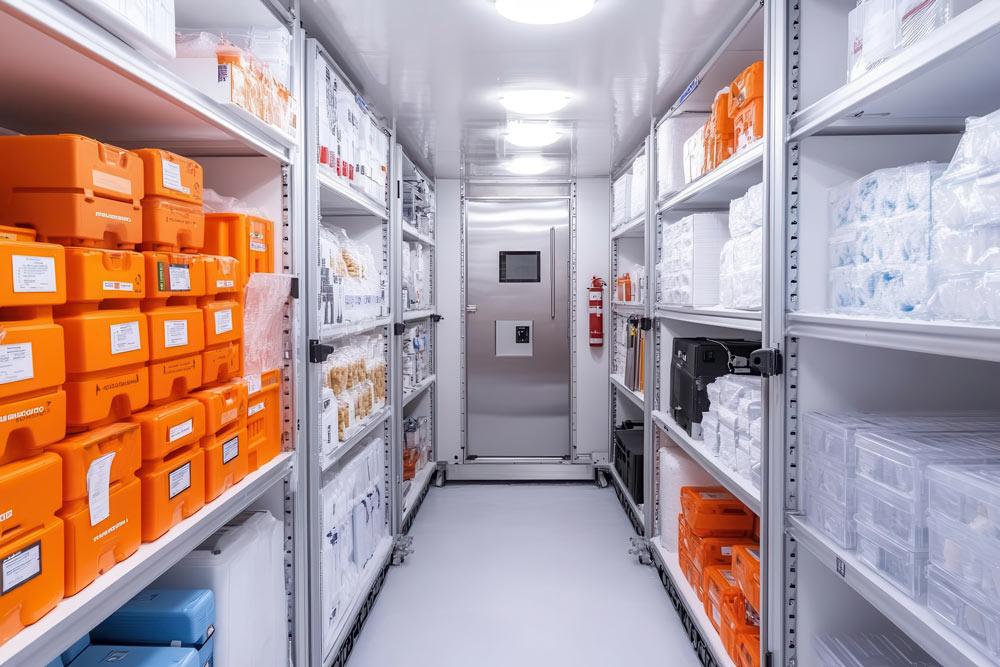
Many businesses also combine these systems with broader cooling infrastructure, such as industrial & commercial refrigeration solutions for complete climate and temperature management.
Main Benefits of VRF Air Conditioning Systems
- Energy Efficiency
One of the biggest VRF air conditioning benefits is energy savings.
The system only delivers the exact amount of cooling or heating needed. This avoids the waste associated with older HVAC systems.
Because inverter compressors rarely run at full power continuously, energy consumption is reduced significantly.
For businesses focused on energy-saving commercial HVAC solutions, this can lead to noticeable long-term savings.
- Individual Zone Control
Each indoor unit operates independently.
This means staff can control temperatures in different rooms without affecting the entire building.
This is particularly useful in:
- Offices
- Hotels
- Multi-tenant buildings
- Meeting spaces
A multi-zone air conditioning system improves comfort while reducing unnecessary cooling.
- Quiet Operation
VRF and VRV systems are generally quieter than traditional ducted HVAC systems.
Indoor units produce minimal noise, and outdoor units are often designed for low-noise operation.
This makes them ideal for:
- Offices
- Medical environments
- Hotels
- Client-facing spaces
- Flexible Installation
VRF systems can support multiple indoor units from one outdoor system.
This makes them suitable for buildings with limited external space.
Pipework layouts can also be more flexible than traditional ducted systems.
- Simultaneous Heating and Cooling
Some advanced systems allow different zones to heat and cool at the same time.
For example:
- South-facing rooms may require cooling
- Shaded rooms may need heating
This is especially useful in large commercial buildings with varying occupancy patterns.
What Are the VRV System Advantages?
Although VRV is technically the same as VRF, Daikin systems are often associated with several advantages:
- Strong reputation for reliability
- Advanced smart controls
- High efficiency ratings
- Wide product range
- Proven commercial performance
Many businesses specifically request VRV air conditioning for offices because of Daikin’s established market position.
However, several other manufacturers also provide excellent VRF systems.
The most important factor is proper design and installation.
VRF vs VRV for Commercial Buildings
Which Buildings Benefit Most?
VRF and VRV systems work particularly well in buildings with:
- Multiple rooms
- Different occupancy patterns
- Long operating hours
- High comfort expectations
Common applications include:
| Building Type | Why VRF/VRV Works Well |
| Offices | Independent room control |
| Hotels | Quiet operation and zoning |
| Retail spaces | Flexible temperature management |
| Restaurants | Efficient cooling during peak hours |
| Clinics | Stable indoor comfort |
| Schools | Energy savings across multiple rooms |
For businesses handling temperature-sensitive products or production processes, systems may also integrate with chilled processing solutions to maintain consistent operational conditions.
VRF vs VRV for Offices
Offices are one of the most common applications for VRF and VRV systems.
Different parts of an office often experience different conditions throughout the day.
Examples include:
- Meeting rooms fill quickly with people
- Server rooms are generating constant heat
- Reception areas are exposed to outdoor temperatures
- Hybrid working is reducing occupancy in some zones
Traditional systems struggle to adapt efficiently.
VRF and VRV systems provide better responsiveness and greater control over energy use.
This is why many businesses researching VRF vs VRV for offices are moving away from older central HVAC systems.
Which Is Better: VRF or VRV?
This is one of the most searched questions online.
The honest answer is:
Neither system is inherently better because they are essentially the same technology.
Instead, businesses should compare:
- Manufacturer quality
- Installer expertise
- System design
- Long-term maintenance support
- Energy efficiency ratings
- Building requirements
The best VRF system for commercial use depends entirely on the building itself.
A poorly designed premium system will perform worse than a properly designed mid-range solution.
VRF System Installation Guide: What Businesses Should Know
Installing a VRF or VRV system requires specialist planning.
A professional installer will assess:
- Building size
- Occupancy patterns
- Heat loads
- Pipework routes
- Electrical infrastructure
- Ventilation requirements
Typical installation process:
- Site survey and system design
- Equipment selection
- Pipework installation
- Indoor and outdoor unit positioning
- Electrical and control setup
- System testing and commissioning
Because these systems are highly technical, correct installation is critical for performance and efficiency.
Common Mistakes Businesses Make When Choosing VRF or VRV Systems
Choosing Based Only on Price
Lower upfront costs can lead to higher operating expenses later.
Energy efficiency and long-term reliability matter more.
Ignoring Future Expansion
Some buildings grow over time.
Choosing a scalable system now can avoid expensive upgrades later.
Poor System Design
Even premium systems perform badly if the layout is incorrect.
Proper zoning and load calculations are essential.
Overlooking Maintenance
Regular servicing helps maintain:
- Energy efficiency
- Air quality
- System lifespan
- Warranty compliance
Are VRF and VRV Systems Environmentally Friendly?
Compared with many traditional HVAC systems, yes.
They are considered more energy-efficient HVAC systems because they:
- Reduce unnecessary energy use
- Adjust output automatically
- Minimise wasted cooling
- Improve operational efficiency
However, refrigerant regulations continue to evolve in the UK and Europe.
Modern systems are increasingly designed to use refrigerants with lower environmental impact.
Businesses planning long-term building upgrades should discuss future compliance during system selection.
Practical Example: VRF vs Traditional HVAC
Imagine a three-floor office building.
Traditional HVAC system:
- Entire floors cooled together
- High energy waste
- Poor temperature consistency
- Limited control
VRF system:
- Individual room control
- Lower operating costs
- Better comfort
- Reduced energy consumption
- Easier expansion
This explains why many commercial property owners now prefer VRF and VRV systems for modern developments.
Final Thoughts
Understanding VRF vs VRV air conditioning is much easier once you realise they are essentially the same technology.
The real focus should be on choosing the right system design for your building and working with experienced specialists who understand commercial climate control properly.
At ColdCare, we help businesses install reliable and energy-efficient cooling systems tailored to their operational needs. From advanced air conditioning setups to complete refrigeration and chilled processing solutions, we provide practical support from design through to installation and maintenance.
If you are planning a commercial HVAC upgrade or want advice on the best system for your property, contact our team for expert guidance tailored to your building.