Commercial air conditioning rarely fails without warning. In offices, retail back-of-house areas, plant rooms and production environments, small changes in comfort or performance can point to a developing fault.
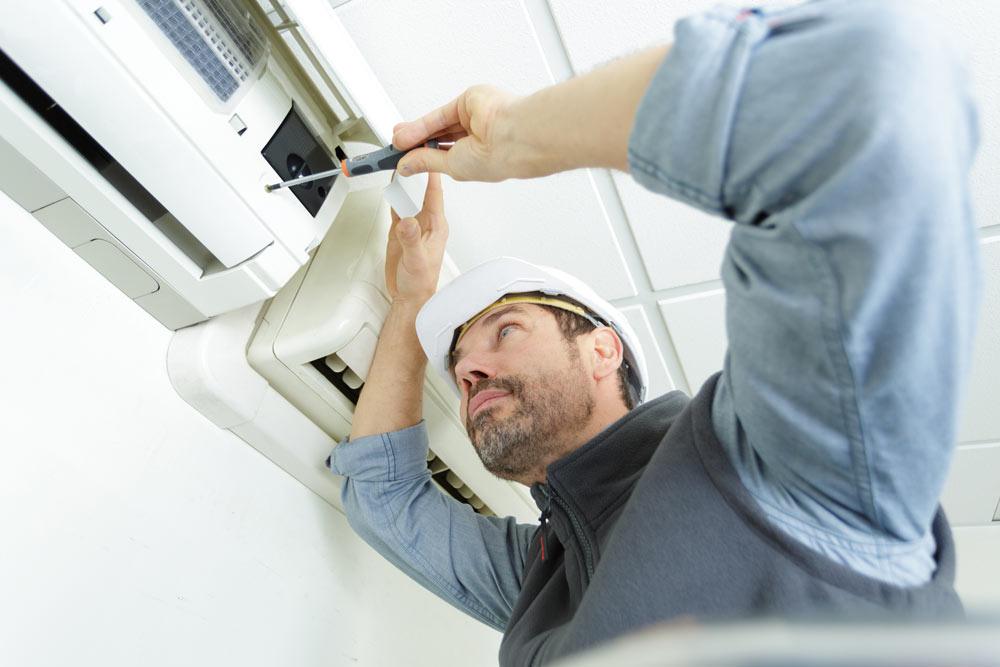
For facilities managers, spotting the early signs helps protect comfort, equipment and operational continuity. Here are the practical symptoms that suggest it is time to arrange professional inspection, servicing or repair.
Changes in comfort, airflow and temperature control
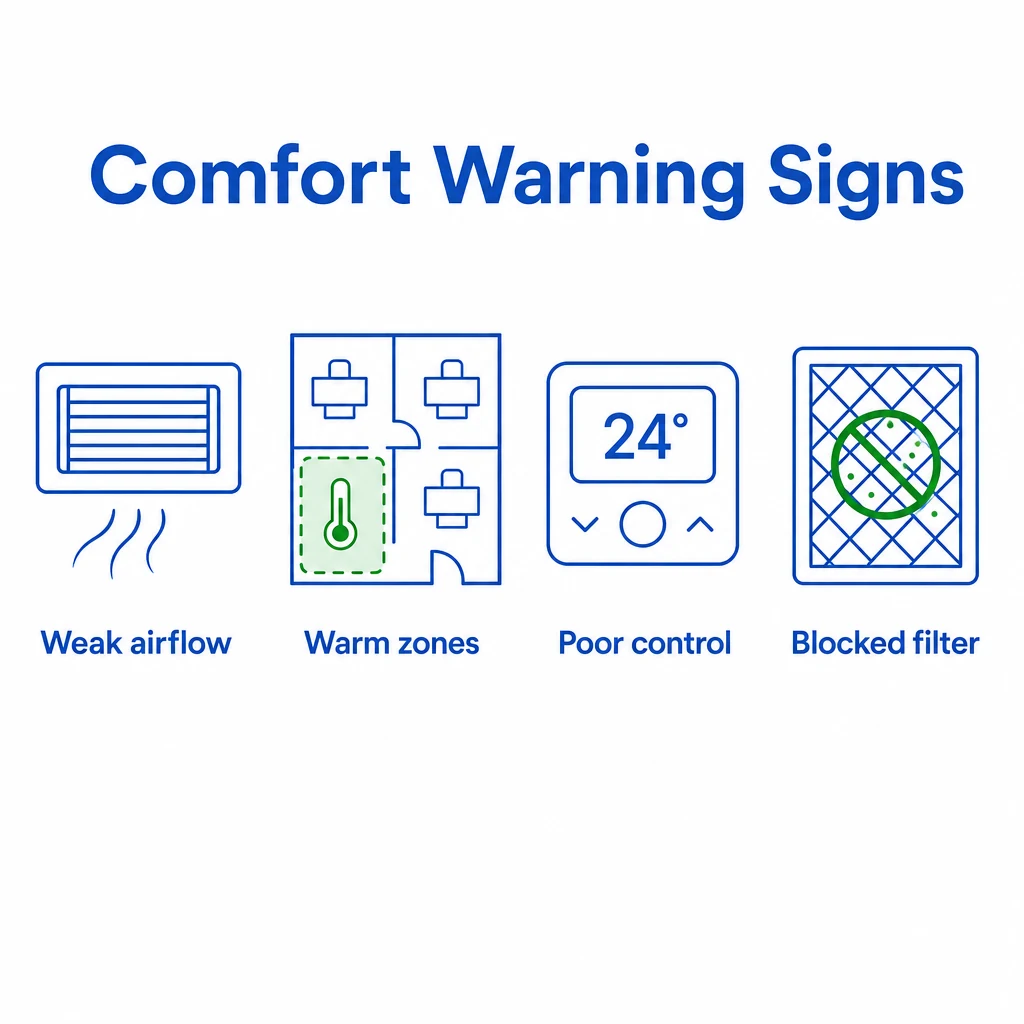
One of the first signs a commercial HVAC system is failing is inconsistent comfort. If some areas feel warm while others are overcooled, or staff are adjusting controls more often than usual, the system may not be distributing air correctly.
Look for patterns rather than isolated complaints. Useful warning signs include:
- Weak airflow from grilles or diffusers
- Warm air when cooling is selected
- Rooms taking much longer to reach set temperature
- Frequent hot and cold spots across the building
- Doors being propped open to compensate for poor comfort
The cause could be as simple as blocked filters, but it may also involve fans, coils, sensors, refrigerant charge or control issues. Record where and when problems occur before calling an engineer.
Noise, odour and visible moisture
A healthy commercial air conditioning system should run with a consistent, familiar sound. New or worsening noises deserve attention, especially grinding, rattling, buzzing, squealing or repeated clicking. These can indicate loose components, worn bearings, electrical issues or compressor strain.
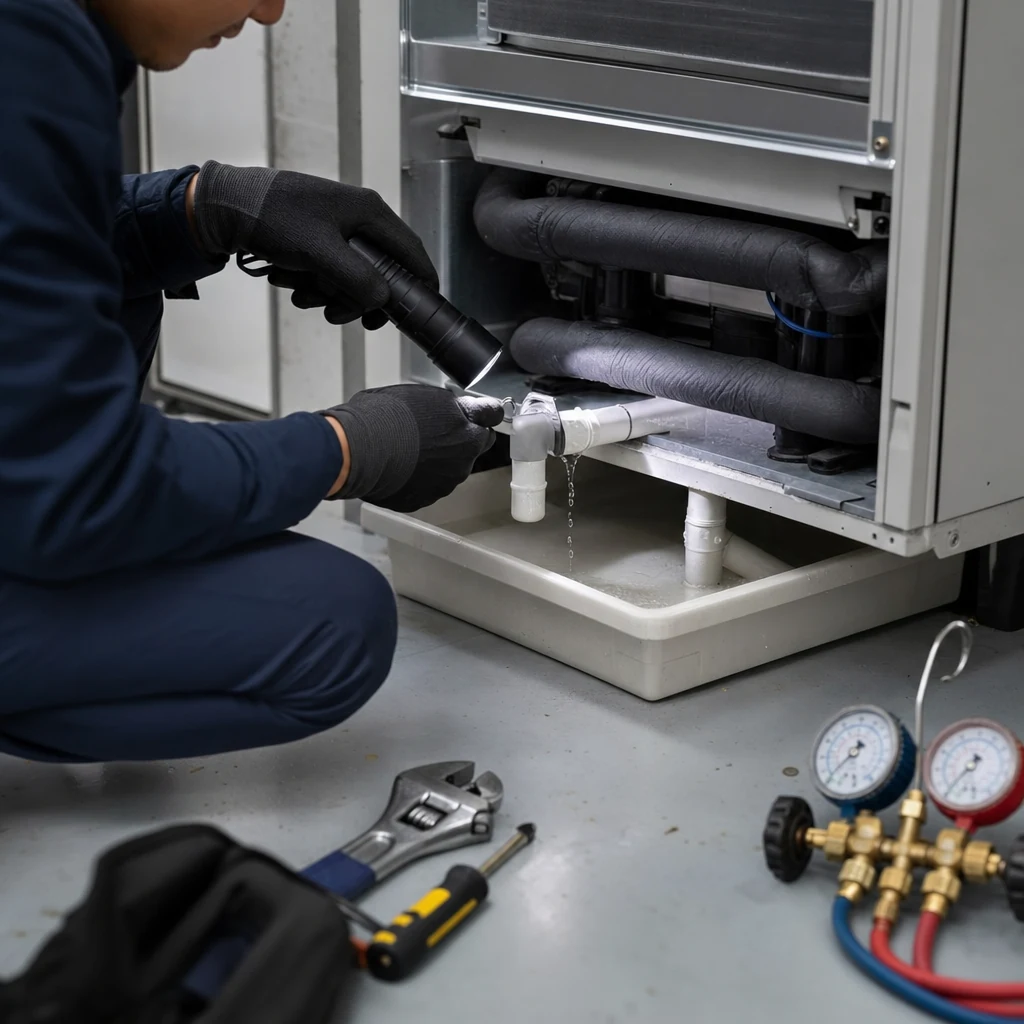
Smells are another useful clue. A musty odour may point to dirty coils, blocked condensate drains or moisture sitting where it should not. A sharp electrical smell should be treated seriously, particularly if it appears alongside tripping or heat at an isolator.
Visible moisture also matters. Condensate leaks, stained ceiling tiles, dripping indoor units, frost on pipework or ice forming around coils can all signal a fault. If water is near electrical equipment, switch the affected unit off if safe to do so and arrange a professional check.
Warning signs around external and plant equipment
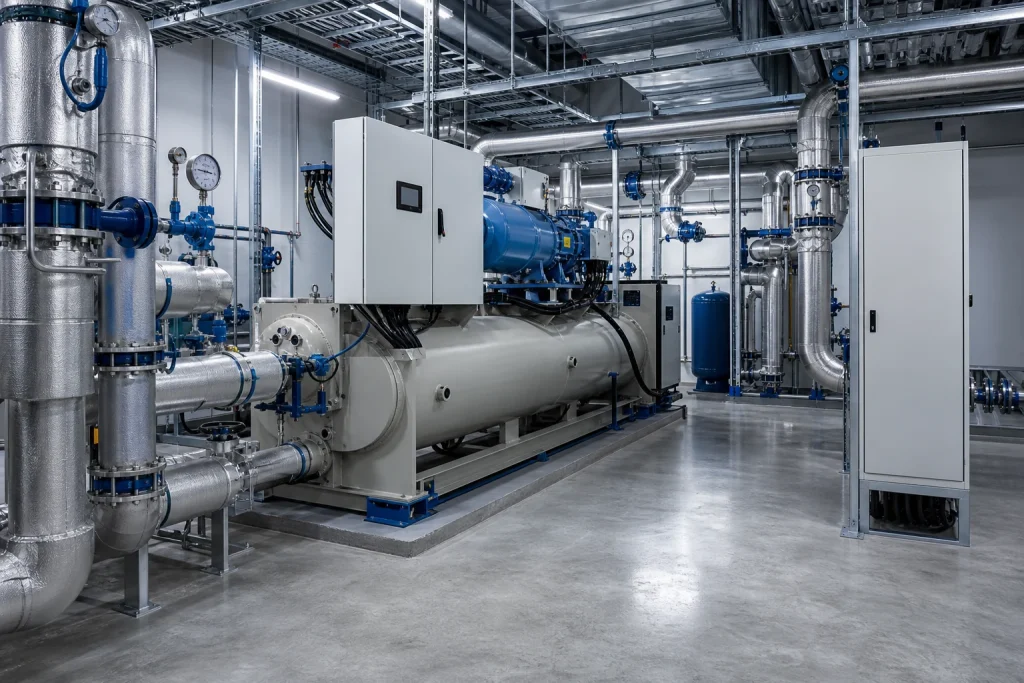
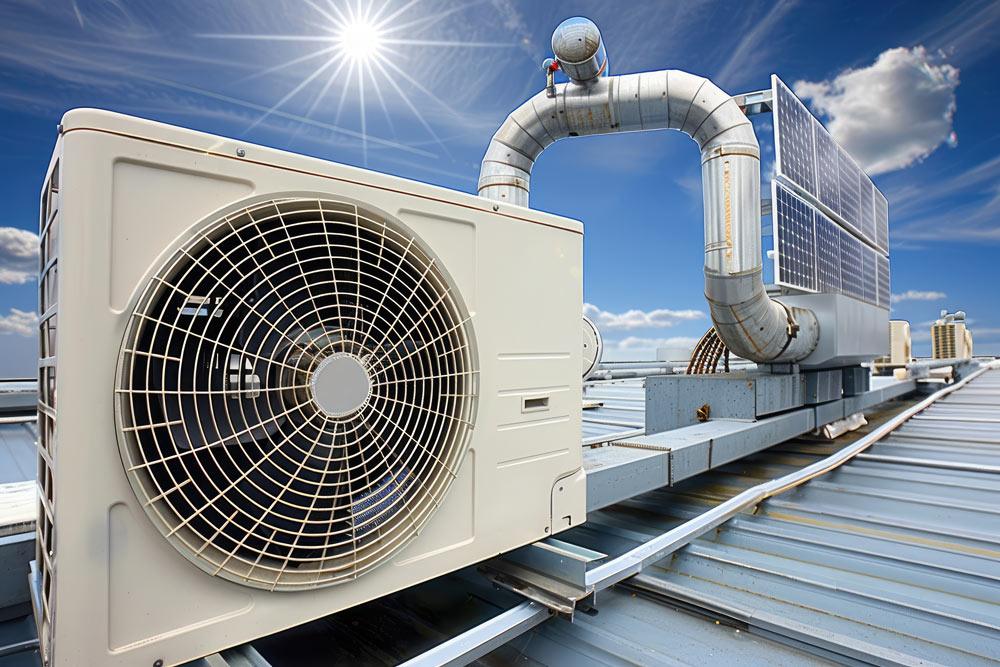
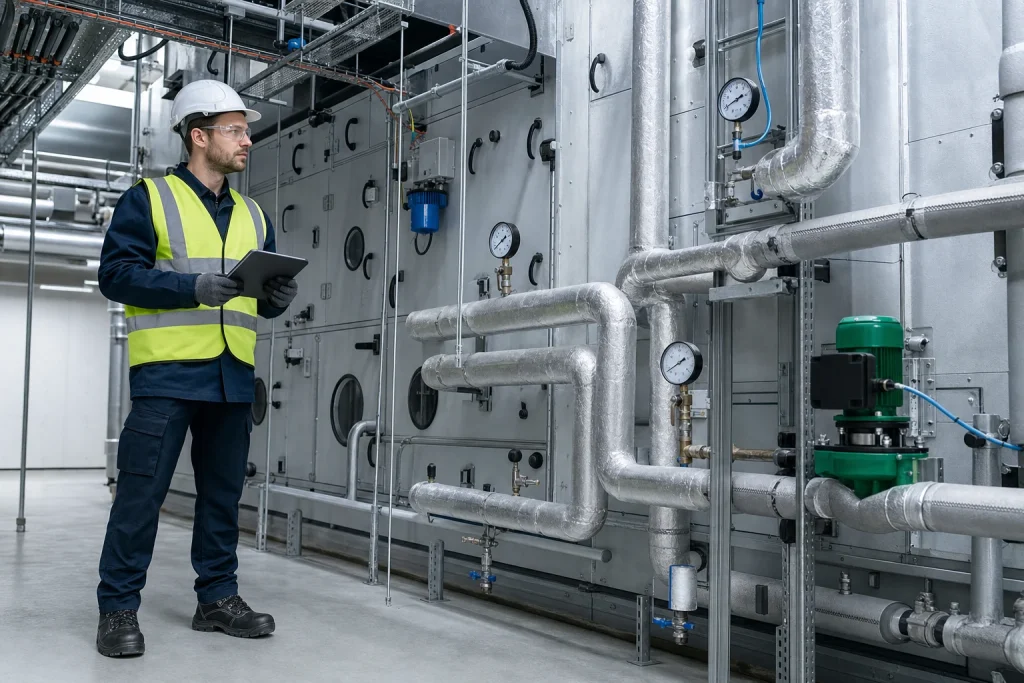
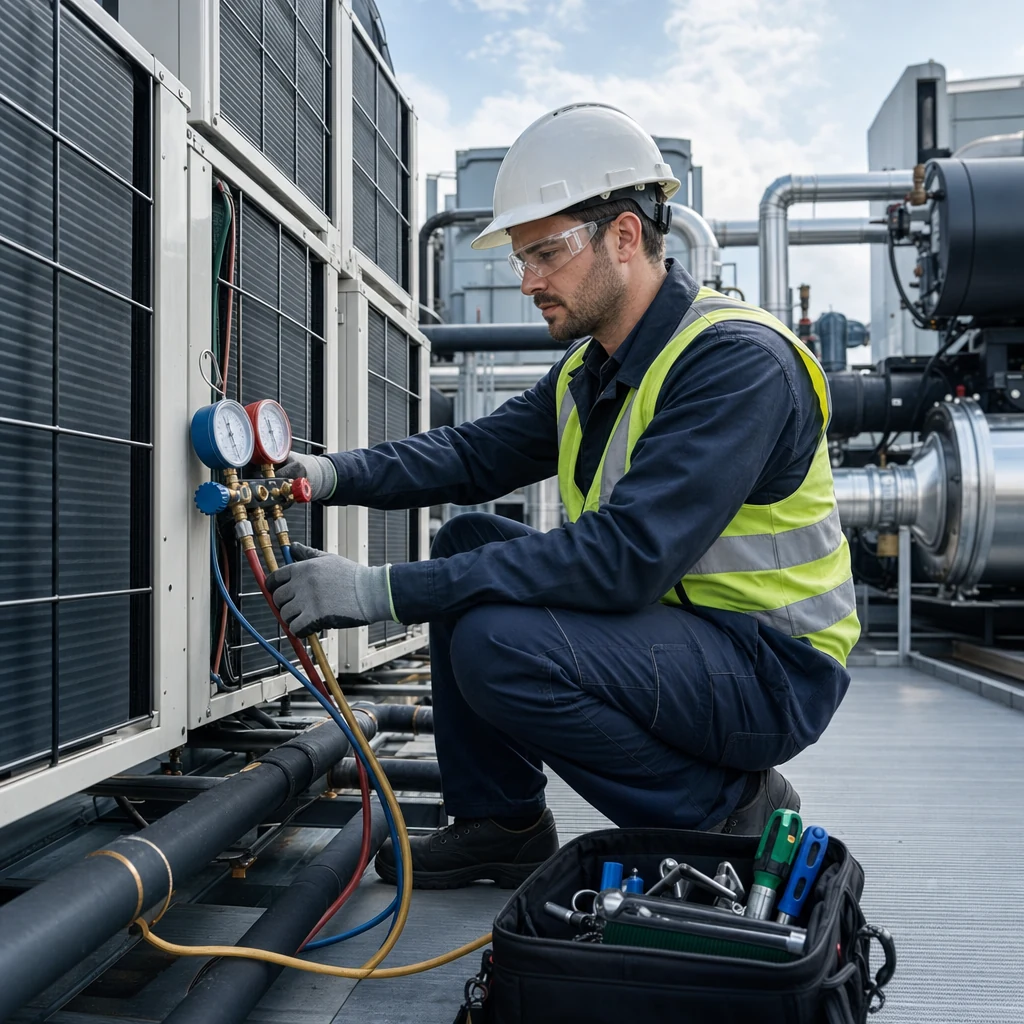
Facilities teams often notice indoor comfort problems first, but the underlying fault may be outside or in a plant area. Condensers, chillers, dry coolers, pumps and associated pipework all need clear airflow, sound mechanical operation and correct controls.
During routine visual checks, watch for debris restricting coils, fans that do not start, unusual vibration, damaged insulation, oil staining, corrosion, loose panels or gauges showing readings outside normal site expectations. On chilled water or glycol systems, changes in pump noise, flow, pressure or process temperature can affect cooling performance across several areas.
These checks should stay visual unless your team is trained and authorised. Refrigerant circuits, electrical components and pressure systems should always be assessed by competent engineers with the right tools and PPE.
Controls, alarms and reliability patterns
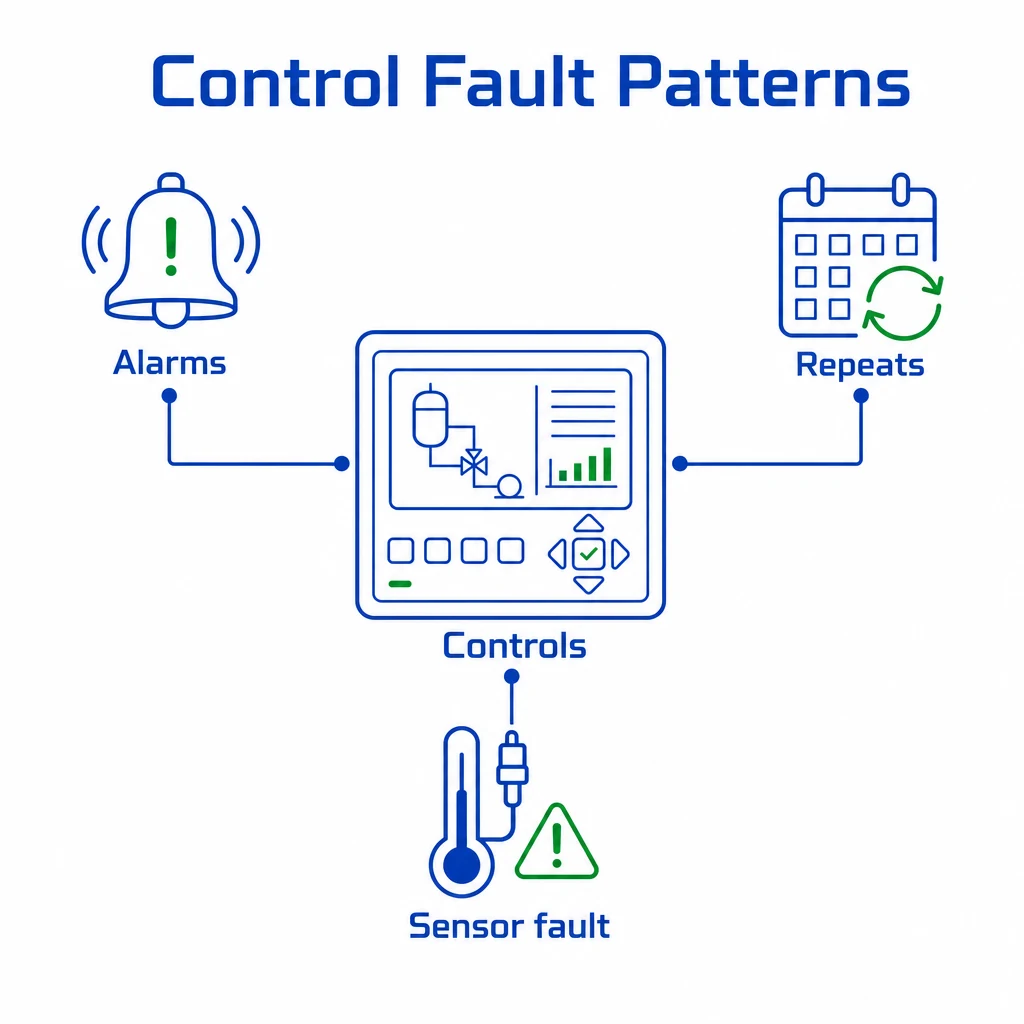
Modern commercial systems often show early fault information through controllers, remote monitoring or building management systems. Do not ignore recurring alarms just because the unit restarts. Repeated resets can mask an issue until it becomes more disruptive.
Common reliability clues include units short cycling, compressors locking out, circuit breakers tripping, temperature sensors reading incorrectly, schedules not operating as expected or a unit failing to respond to demand. Even intermittent problems are worth investigating because they often reveal control, electrical or protection faults.
Keep a simple log of alarm codes, reset times, affected units and operating conditions. This gives the attending engineer a clearer route to diagnosis and can reduce repeat visits by linking symptoms to the right part of the system.
When to service, repair or plan an upgrade
Not every symptom means a major repair is needed. Some issues are resolved through planned servicing, cleaning, adjustment or replacement of wear components. Others require targeted repair, especially where a fault affects safety, refrigerant containment, electrical reliability or business-critical cooling.
A useful approach is to consider the asset’s duty, age, service history, access, refrigerant type, parts availability and how important that area is to daily operations. One isolated fault on a well-maintained system may be straightforward. Repeated faults across the same equipment may justify a wider review.
For support with inspection, servicing and commercial air conditioning repair, Cold Care provides air conditioning installation, service and maintenance for commercial and industrial environments. Early advice can help you choose the most practical next step rather than waiting for full failure.
- Uneven temperatures, weak airflow and longer cooling times are early warning signs.
- New noises, odours, leaks or ice should be checked promptly.
- External equipment and plant areas can reveal faults before occupants notice them.
- Alarm codes and reset history help engineers diagnose issues faster.
- Regular maintenance supports comfort, reliability and planned decision-making.
Frequently asked questions
Can an air conditioning unit need repair even if it still cools?
Yes. A system may still provide some cooling while working harder than it should. Weak airflow, short cycling, alarms, leaks or unusual noise can all indicate a developing fault.
Should we switch the system off before an engineer arrives?
If there is a burning smell, water near electrics, repeated tripping or severe noise, switch the affected unit off if it is safe to do so. For minor comfort issues, note the symptoms and seek advice.
How often should commercial air conditioning be checked?
The right frequency depends on usage, environment and asset criticality. Busy retail, process or server-related areas may need more frequent attention than lightly used comfort cooling.
Is repeated resetting a problem?
Yes. A reset may temporarily clear an alarm, but if the fault returns it should be investigated. The system is usually protecting itself from an underlying issue.
Need help with a commercial AC fault?
If your system is showing any of these signs, Cold Care can inspect, diagnose and recommend the right next step.